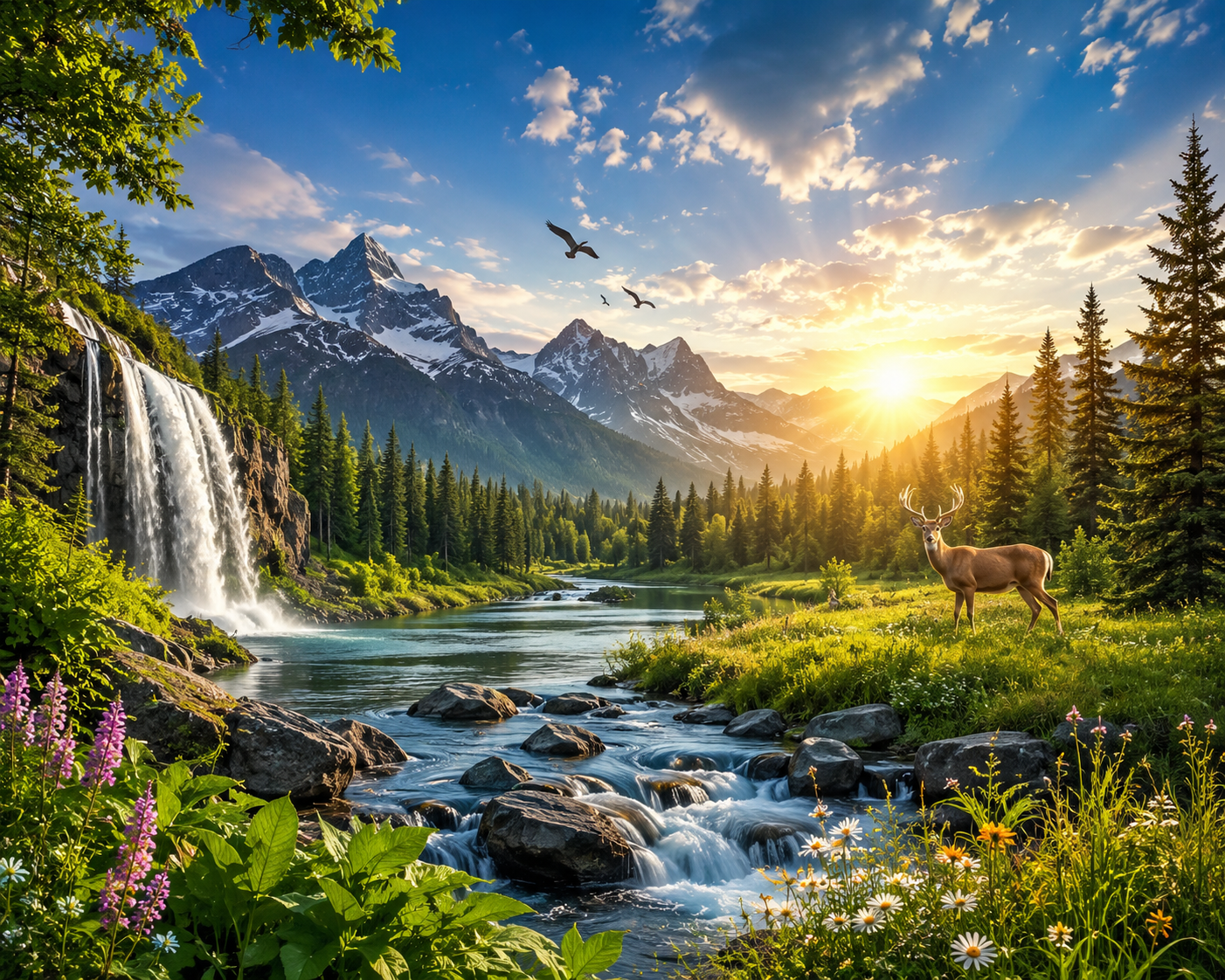
Nature: The Lifeline of Humanity, Biodiversity, and the Future of Our Planet
Nature is not just a collection of trees, rivers, mountains, and animals. It is the invisible engine that keeps life moving on Earth. Every breath we take, every meal we eat, and every drop of water we drink is connected to nature in some way. Yet, in today’s fast-paced digital world, many people are becoming disconnected from the natural environment. Skyscrapers are replacing forests, plastic is invading oceans, and climate change is transforming ecosystems faster than scientists once predicted. It feels a bit like humanity is sawing off the very branch it is sitting on.
The importance of nature has become one of the biggest global discussions in 2026. Governments, environmental organizations, scientists, and even multinational corporations are now realizing that protecting nature is not just about saving animals. It is about protecting economies, food systems, public health, and human survival itself. According to the United Nations, over half of the world’s GDP depends directly on nature and ecosystem services. Forests, oceans, wetlands, and biodiversity work together like the gears inside a giant machine that regulates climate, stores carbon, purifies water, and supports life.
The conversation around nature has also shifted from simple conservation to something bigger — coexistence. Humanity can no longer treat nature as an unlimited resource. The future depends on creating a balance where economic growth and environmental sustainability move together instead of colliding head-on. That is why understanding nature has never been more important than it is today.
What Is Nature and Why Does It Matter?
Nature includes everything that exists naturally on Earth: forests, oceans, wildlife, mountains, deserts, rivers, and even microscopic organisms. Think of nature as the world’s largest interconnected network. Remove one piece, and the entire system begins to weaken. Bees pollinate crops, forests absorb carbon dioxide, wetlands filter water, and oceans regulate global temperatures. Every ecosystem plays a role, whether humans notice it or not.
Humans often behave as though technology has made us independent from nature, but that is an illusion. Cities may look concrete and self-sufficient, yet they still rely on natural resources for food, water, oxygen, and energy. Nature is essentially the operating system of the planet. Without healthy ecosystems, modern civilization cannot function properly. When forests disappear, rainfall patterns change. When oceans warm, fisheries collapse. When biodiversity declines, food security becomes unstable.
The United Nations reports that land and oceans absorb more than half of human-generated carbon emissions, acting as natural climate stabilizers. That means nature is quietly cleaning up humanity’s environmental mess every single day. Imagine if nature suddenly stopped doing that job. The consequences would be catastrophic for climate systems, agriculture, and public health.
The Deep Connection Between Humans and Nature
Humans evolved within nature, not outside it. Ancient civilizations depended on rivers, forests, and fertile land to survive. Even today, billions of people rely directly on natural ecosystems for their livelihoods. Forest communities gather medicinal plants, coastal communities depend on fisheries, and farmers rely on healthy soil and pollinators.
Nature also shapes culture, spirituality, and identity. Mountains, rivers, and forests appear in myths, religions, art, and literature across every civilization. Nature inspires creativity in ways that artificial environments simply cannot replicate. Have you ever noticed how a walk through a forest instantly feels calming compared to sitting in traffic? That reaction is deeply wired into human psychology.
Scientists increasingly link exposure to nature with lower stress, reduced anxiety, and better mental health. Green spaces act almost like natural therapy. In an age dominated by screens and urban lifestyles, reconnecting with nature may be one of the simplest ways to improve emotional well-being.
Nature as Earth’s Survival System
Nature works through balance. Predators control prey populations, forests regulate rainfall, and coral reefs protect coastlines from storms. When humans disrupt these systems, the effects ripple outward like falling dominoes. Deforestation can trigger droughts, pollution can poison oceans, and biodiversity loss can weaken entire ecosystems.
One shocking statistic from the World Health Organization states that around 75% of global freshwater resources depend on healthy ecosystems. Wetlands, forests, and rivers naturally clean water before it reaches human populations. Destroying those ecosystems is like dismantling Earth’s natural water treatment plants.
Nature is not a luxury. It is infrastructure. The difference is that natural infrastructure has been working efficiently for billions of years — long before humans built roads, dams, or factories.
The Role of Nature in Climate Stability
Climate change is one of the defining challenges of the modern era, and nature sits right at the center of the battle. Forests, oceans, grasslands, and wetlands act as natural climate regulators. They absorb greenhouse gases, cool the atmosphere, and reduce the impact of extreme weather events.
Scientists now emphasize the importance of nature-based solutions, which use ecosystems to combat climate change. Restoring forests, protecting mangroves, and rebuilding wetlands are becoming critical global strategies. According to the United Nations, one-third of the greenhouse gas reductions needed this decade could come from improving nature’s ability to absorb emissions.
Climate change and nature are deeply connected. A damaged environment accelerates climate problems, while climate change further damages ecosystems. It becomes a dangerous cycle, almost like a feedback loop spiraling out of control.
Forests as Carbon Sinks
Forests are among the planet’s most powerful climate defenders. Trees absorb carbon dioxide during photosynthesis and store it in trunks, branches, roots, and soil. Tropical rainforests, especially the Amazon, are often called the “lungs of the Earth” because they absorb enormous amounts of carbon.
The problem is that deforestation is weakening this natural defense system. Parts of the Amazon rainforest are already shifting from carbon sinks to carbon sources due to large-scale destruction. When forests burn or are cleared, they release stored carbon back into the atmosphere, intensifying global warming.
A recent scientific study warned that climate change threatens global plant diversity, with 7% to 16% of plant species potentially losing over 90% of their habitat by 2100. That statistic highlights just how fragile ecosystems are becoming under rising temperatures.
Oceans and Wetlands Fighting Climate Change
Oceans absorb massive amounts of heat and carbon dioxide, acting like giant planetary shock absorbers. Coastal ecosystems such as mangroves and seagrasses are especially effective at capturing carbon. According to the United Nations, mangroves can store carbon at rates up to four times higher than terrestrial forests.
Wetlands also play a huge role in climate regulation. Although peatlands cover only 3% of Earth’s land surface, they store twice as much carbon as all the world’s forests combined. Destroying wetlands is like opening a giant carbon vault into the atmosphere.
These ecosystems also protect communities from floods, hurricanes, and coastal erosion. Nature often provides better and cheaper protection than concrete infrastructure.
Biodiversity and the Web of Life
Biodiversity refers to the variety of life on Earth, including plants, animals, fungi, bacteria, and ecosystems. It is essentially nature’s safety net. The greater the biodiversity, the more resilient ecosystems become.
Imagine a soccer team where only one player knows how to defend. If that player gets injured, the whole team collapses. Biodiversity works similarly. Ecosystems with many species can adapt better to environmental changes because different organisms perform overlapping roles.
The World Health Organization reports that forests contain around 80% of terrestrial biodiversity. Yet biodiversity loss is accelerating at an alarming rate due to habitat destruction, pollution, and climate change.
Why Biodiversity Matters
Biodiversity supports food production, medicine, climate regulation, and disease control. More than 75% of global food crops rely on pollinators like bees and butterflies. Without pollinators, food systems would face enormous disruption.
Modern medicine also depends heavily on biodiversity. Over half of all medicines come from natural sources. Plants, fungi, and marine organisms have contributed to antibiotics, cancer treatments, and painkillers.
Healthy biodiversity also protects economies. Agriculture, tourism, fishing, and forestry all depend on functioning ecosystems. When biodiversity declines, financial systems feel the impact too.
The Growing Threat of Species Extinction
Scientists estimate that up to one million species face extinction within the coming decades. Habitat destruction remains the biggest driver, but climate change is making the crisis worse.
Wildlife populations have reportedly declined by 73% globally since 1970, according to recent UNESCO findings. The loss of species is not just tragic emotionally; it weakens ecosystem stability and reduces humanity’s long-term survival chances.
Some ecosystems are approaching dangerous tipping points. Coral reefs are bleaching due to warming oceans, Arctic habitats are melting, and tropical forests are shrinking. Once ecosystems collapse completely, recovery becomes extremely difficult.
Nature and Human Health
Nature affects human health in ways many people rarely consider. Clean air, fresh water, nutritious food, and medicinal resources all originate from healthy ecosystems. When ecosystems decline, human health problems increase.
Air pollution, contaminated water, and climate-related disasters already affect millions worldwide. Healthy forests and wetlands naturally filter pollutants, reducing environmental health risks. Nature is like Earth’s immune system, constantly working behind the scenes to keep conditions suitable for life.
Mental Health Benefits of Green Spaces
Modern lifestyles often involve endless screen time, noise, and stress. Spending time in nature offers a powerful counterbalance. Studies consistently show that green spaces improve mood, reduce stress hormones, and support mental well-being.
Urban parks, forests, and beaches provide psychological relief from the pressure of modern living. Nature encourages mindfulness without forcing it. The rustling of leaves, the sound of waves, or the smell of rain can instantly calm the nervous system.
That explains why many cities are investing heavily in green infrastructure and urban forests. Access to nature is increasingly viewed not just as an environmental issue, but as a public health necessity.
Medicines and Food Derived from Nature
Nature functions as a giant pharmacy. Many life-saving medicines originated from plants, fungi, and microorganisms. Antibiotics, aspirin, and cancer drugs all have roots in natural compounds.
Food systems also rely entirely on ecosystems. Soil fertility, rainfall, pollination, and biodiversity all influence agricultural productivity. According to WHO data, pollinators contribute between US$235 billion and US$577 billion annually to global agriculture.
Protecting nature therefore means protecting food security and healthcare systems at the same time.
Nature’s Economic Importance
Nature is often underestimated economically because many ecosystem services are invisible in financial markets. Yet natural systems quietly provide trillions of dollars in value every year.
Agriculture, fisheries, tourism, pharmaceuticals, and renewable energy all depend on healthy ecosystems. Without forests, rainfall patterns become unstable. Without biodiversity, crop yields decline. Without oceans, coastal economies collapse.
Agriculture and Pollination
Agriculture depends heavily on biodiversity and ecosystem health. Pollinators, fertile soils, and natural pest control systems all support food production. Research published in Nature Communications found that agricultural diversification improves biodiversity, ecosystem services, and long-term profitability.
This challenges the old belief that economic growth and environmental sustainability cannot coexist. Sustainable farming practices often improve resilience and reduce long-term costs.
Tourism and Green Economies
Nature tourism generates billions of dollars globally. National parks, beaches, forests, and wildlife reserves attract millions of visitors every year. Countries rich in biodiversity often depend heavily on eco-tourism revenue.
Protected ecosystems also create jobs in conservation, renewable energy, and sustainable agriculture. As global awareness grows, businesses are increasingly integrating environmental sustainability into their strategies.
Reuters recently reported that companies are being urged to protect nature or risk major economic instability in the future. Nature is no longer viewed as separate from business success. It is becoming central to economic resilience.
The Biggest Threats Facing Nature Today
Human activity is pushing natural systems toward dangerous limits. Deforestation, pollution, overconsumption, and climate change are damaging ecosystems faster than they can recover.
Deforestation and Habitat Destruction
Forests continue disappearing due to agriculture, urban expansion, mining, and logging. Habitat destruction remains the leading cause of biodiversity loss worldwide.
Recent environmental reports show shocking habitat declines in parts of Europe and the UK, including the loss of 97% of species-rich grasslands and 85% of salt marshes. These numbers reveal how rapidly ecosystems can disappear when environmental protections weaken.
Pollution and Plastic Waste
Plastic pollution has invaded rivers, oceans, and even human bodies. Microplastics now appear in marine life, drinking water, and soil ecosystems.
Air pollution also damages forests, crops, and wildlife habitats. Industrial chemicals, pesticides, and waste runoff contaminate ecosystems and disrupt biodiversity.
Climate Change and Ecosystem Collapse
Climate change intensifies every environmental threat. Rising temperatures, extreme weather, ocean acidification, and droughts place enormous stress on ecosystems.
Some scientists warn that Earth may be approaching ecological tipping points where recovery becomes impossible. That is why environmental action today matters more than ever before.
Global Conservation Efforts
Despite the challenges, there are reasons for optimism. Governments, organizations, scientists, and local communities are increasingly working together to protect nature.
Protected Areas and UNESCO Sites
Protected areas remain one of the strongest tools for conservation. UNESCO-designated sites have shown remarkable success in preserving biodiversity and stabilizing wildlife populations.
These protected regions safeguard ecosystems while supporting local communities and sustainable tourism.
Nature-Based Solutions for the Future
Nature-based solutions are gaining global momentum. Reforestation, wetland restoration, regenerative agriculture, and coastal ecosystem protection all help combat climate change while supporting biodiversity.
Research shows that restoring ecosystems can provide climate benefits, economic opportunities, and stronger resilience for communities facing environmental risks.
How Individuals Can Protect Nature
Protecting nature is not only the responsibility of governments. Individual choices matter too. Small lifestyle changes, when multiplied across millions of people, can create massive environmental impact.
Sustainable Daily Habits
People can reduce waste, avoid single-use plastics, conserve water, support renewable energy, and choose sustainable products. Planting trees, reducing meat consumption, and supporting local farmers also contribute positively.
Even simple habits like carrying reusable bags or avoiding litter can help protect ecosystems.
Supporting Conservation and Eco-Friendly Businesses
Consumers increasingly influence business behavior. Supporting companies that prioritize sustainability encourages greener economic systems.
Donating to conservation projects, volunteering, and participating in community cleanups are also effective ways to contribute.
The Future of Nature and Humanity
Humanity stands at a crossroads. One path leads toward ecological collapse, resource shortages, and worsening climate disasters. The other path focuses on sustainability, restoration, and coexistence with nature.
The encouraging news is that nature can recover surprisingly quickly when given the chance. Forests regenerate, wildlife returns, and ecosystems rebuild if destructive pressures decrease. Nature has extraordinary resilience.
The challenge now is speed. Environmental damage is accelerating rapidly, and global action must move faster to match the scale of the crisis. Protecting nature is no longer just an environmental movement. It is a survival strategy for humanity itself.
Conclusion
Nature is the foundation of life on Earth. It regulates climate, supports biodiversity, protects human health, drives economies, and provides the resources necessary for civilization to exist. Yet human activity has pushed ecosystems to dangerous limits.
The future depends on recognizing that humanity and nature are not separate forces. They are deeply interconnected parts of the same system. Every forest protected, every wetland restored, and every species saved strengthens the planet’s resilience.
The good news is that solutions already exist. Conservation, sustainable development, renewable energy, and nature-based climate strategies can still create a healthier future. Protecting nature is not about going backward. It is about building a smarter, safer, and more sustainable world for future generations.
FAQs
1. Why is nature important for humans?
Nature provides oxygen, food, water, medicine, climate regulation, and mental health benefits. Human survival depends entirely on healthy ecosystems.
2. What is biodiversity?
Biodiversity refers to the variety of life on Earth, including plants, animals, microorganisms, and ecosystems that work together to support life.
3. How does nature help fight climate change?
Forests, oceans, wetlands, and grasslands absorb carbon dioxide and regulate temperatures, helping reduce the impact of climate change.
4. What are the biggest threats to nature?
The main threats include deforestation, pollution, climate change, habitat destruction, and overconsumption of natural resources.
5. How can individuals help protect nature?
People can reduce waste, conserve water, support eco-friendly businesses, plant trees, avoid plastic pollution, and support conservation efforts.
